%20(1).png)
How Pool Safety Cover Duplication Works: From Template to Replacement


Direct answer: Pool safety-cover duplication uses a qualifying existing cover as a physical template for a custom replacement. The old cover communicates the pool shape, cutouts, webbing and strap locations that must correspond with the established anchor layout. The process runs from template review and shipping through quote approval, fabrication and a final fit check.
Duplication can be especially useful when the customer wants to preserve existing deck anchors and the original manufacturer record is unavailable. The condition of the old cover and any changes to the pool or deck must be evaluated first.
Step 1: Confirm that duplication is the right method
Begin with photographs of the cover installed, the entire pool and surrounding deck, damaged areas, obstacles and the manufacturer label. Explain whether the cover currently fits, whether anchors have moved and whether the pool or deck has been renovated.
A serial number or original plan may offer another replacement path. When reliable records are unavailable, the old cover itself can provide information that dimensions alone cannot.
Step 2: Review the old cover’s condition
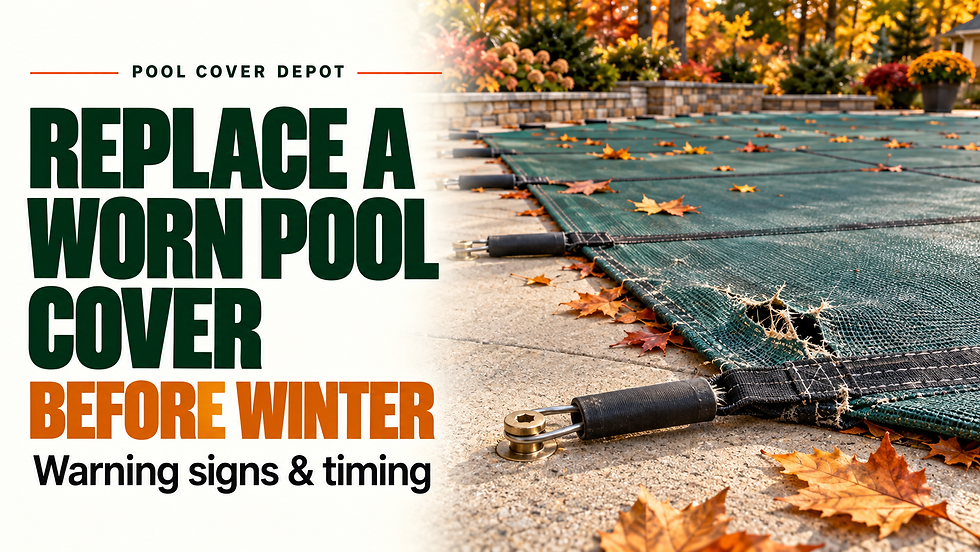
A worn cover does not automatically become unusable as a template. The important question is whether it still communicates the original geometry and strap layout. The review should identify:
Missing or severely distorted sections.
Stretched fabric or altered straps.
Previous repairs and added patches.
Unreadable or missing labels.
Changes made to the pool, deck or anchor positions.
Areas that never fit correctly.
Additional measurements may be required when the old cover cannot provide reliable information by itself.
Step 3: Remove hardware and prepare the cover
Follow the supplied packing instructions. The cover generally needs to be clean and completely dry before packing. Remove springs or other hardware when instructed, label the package and keep photographs of the cover and identification tag.
Packing a wet or dirty cover can add unnecessary weight and create handling or condition problems. Do not ship the cover until the project and shipping method have been authorized.
Step 4: Ship the original for inspection
Pool Cover Depot provides a shipping box, packing instructions and prepaid shipping labels for qualifying nationwide duplication projects. Eligibility and shipping scope should be confirmed before the cover is sent.
Keep the tracking information. If the old cover is required back, discuss that before shipment because template handling and return policies can vary.
Step 5: Inspect and document the template
After arrival, the cover is reviewed for identification, material, dimensions, shape, cutouts, reinforcement and strap placement. Questions or inconsistencies should be resolved before production.
Step 6: Confirm material, quote and production details
The customer selects the approved replacement material and reviews the complete quote. The proposal should identify the material, color, included hardware, production scope, expected timing, shipping and any assumptions about the existing pool or anchor system.
Confirm any change in material and its drainage requirements before approving fabrication.
Step 7: Fabricate the custom replacement
The replacement is produced from the approved information.
Custom fabrication time varies with season, cover complexity, manufacturer and whether the design requires clarification.
Step 8: Deliver and verify the fit
When the replacement arrives, compare it with the project information and install it according to the manufacturer’s requirements. Confirm alignment, overlap, strap and spring tension, obstacle details and anchor operation. Damaged anchors or deck conditions should be corrected rather than ignored.
When duplication may not be enough
The pool or deck changed after the original cover was produced.
The old cover was altered and no longer represents the original layout.
Large sections or critical straps are missing.
The existing cover never fit correctly.
Anchor positions moved or require redesign.
The requested replacement material requires a different approved design.
In these situations, professional pool and anchor measurements may be required.
Duplication, a factory reorder and new measurements are different paths
A factory reorder uses existing design records; physical duplication uses the old cover; new measurements document the current site. The reviewer may need more than one source to resolve changes or fit problems.
Tell the reviewer about changes that may not be obvious in photographs: coping replaced with a different profile, a deck resurfacing that covers anchor heads, relocated rails, an added raised spa, or straps shortened during an earlier repair. Copying a past workaround can carry the same problem into the new cover.
A packing checklist that preserves useful information
Before folding, photograph which end faces the steps or another distinctive feature, and record the positions of missing straps or sections.
Use the packing method supplied for your project. Retain loose hardware unless the instructions request it; loose metal can damage fabric during transport. Do not cut out damaged sections or trim the cover to fit a smaller box. Explain prior alterations instead of trying to make the template look neater.
Shipping preparation is different from seasonal mesh-cover storage: a cover packed for transport needs the cleanliness and dryness specified in the shipping instructions, even when its seasonal storage bag is designed to allow drainage.
Plan for the period without the old cover
Removing a cover for duplication leaves a gap in that layer of protection. Keep other access barriers secure, prevent unsupervised access and agree on the closing and replacement sequence before shipment. A damaged old cover should not be treated as a safe temporary solution simply because a replacement is on order.
At delivery, keep the job record, product identification and care instructions together. Report alignment concerns before modifying straps, moving anchors or drilling new holes. Those changes can obscure the cause of a fit problem and affect the manufacturer’s remedy.
Start a nationwide duplication review
Learn about Pool Cover Depot’s nationwide pool cover duplication service. Local St. Louis-area homeowners who need on-site measurement and installation can review our custom pool safety cover services.
Confirm what duplication includes in the finished order
Separate the shape/template work from the hardware allowance. Ask the written order to identify the new model, reused anchor locations, supplied attachments, any expected deck work and the final fit-review responsibility.
Compare the manufacturer model guides if you are changing material or brand. Retain the old cover through template acceptance.
Frequently asked questions
Can a torn cover still be duplicated?
Possibly. The answer depends on the location and extent of the damage and whether the cover still preserves the necessary shape and strap information.
Will duplication reuse all my anchors?
The process is intended to preserve the relevant layout when the template and anchors are reliable, but damaged, moved or incompatible anchors and pool changes can require corrections.
Do I need the serial number?
No. A serial number can help locate an original record, but a qualifying old cover may be used when the number is missing or no record is available.
Should I send the springs with the cover?
Follow the packing instructions supplied for the project. Remove and retain hardware unless Pool Cover Depot specifically asks for it.
Can you duplicate covers outside Missouri?
Yes. Pool Cover Depot reviews qualifying inground safety covers for duplication throughout the United States.


Comments